


Finding Help for C&P Exam Failures: Take Control of Your VA Claim

You showed up. You did everything right. You attended your Compensation and Pension (C&P) exam, submitted your medical records, and gathered supporting evidence. Yet, the VA denied your claim or gave you a rating that doesn’t reflect your true condition. This is not the end of your fight. It’s time to get tactical, get clear, and get moving with the right tools and intelligence. This post is your mission briefing on how to find help after a C&P exam failure and take control of your VA benefits claim.
How to Get Help for C&P Exam Failures: What You Need to Know
A failed C&P exam can feel like a brick wall. But most veterans don’t realize that failure often means the VA examiner missed something, or the evidence wasn’t properly connected to your service. The system is complex, and the VA’s process is not designed to make it easy for you. That’s why you need to understand exactly what’s in your file and how to use that information to your advantage.
Here’s what you need to do:
Request your full claims file (C-file): This is your weapon. It contains every document, exam report, and note the VA has on your claim. Without it, you’re flying blind.
Analyze the exam report carefully: Look for inconsistencies, missing information, or errors in the examiner’s findings.
Identify gaps in medical evidence: Did the examiner fail to consider key medical records or service treatment records? Are there secondary conditions linked to your primary disability that were ignored?
Understand the legal standards: The VA must provide a nexus - a clear link between your service and your disability. If the exam failed to establish this, that’s your opening.
Develop a clear plan of action: Whether it’s gathering new evidence, requesting a new exam, or filing a Notice of Disagreement (NOD), you need a prioritized, step-by-step approach.
You don’t have to guess what to do next. You need c&p exam failure assistance that gives you a forensic look at your file and hands you the intelligence to lead your own case.

What to Expect When You Seek Help for C&P Exam Failures
When you reach out for help, you want more than just sympathy or vague advice. You want a clear, no-nonsense breakdown of your claim’s strengths and weaknesses. Here’s what a veteran-centric, tactical support system should provide:
Complete file deconstruction: Every page of your C-file is analyzed to find overlooked evidence or errors.
Identification of legal and procedural failures: Did the VA misapply the law? Did the examiner ignore critical evidence? These are the gaps you can exploit.
A prioritized action plan: You get a clear list of what to do next, whether it’s submitting new evidence, requesting a new exam, or appealing.
Empowerment through knowledge: You learn exactly what’s in your file and how to use it. No hand-holding, no rescuing. You lead your case.
Flat-fee, transparent pricing: No contingency fees that reward delay. You pay for intelligence and clarity upfront.
This approach closes the visibility gap that traps so many veterans in endless appeals and denials. It’s about delivering intelligence, not paperwork.
Is hypothyroidism a presumptive VA disability?
Hypothyroidism is a condition where the thyroid gland does not produce enough hormones, leading to fatigue, weight gain, and other symptoms. Many veterans wonder if hypothyroidism qualifies as a presumptive VA disability, meaning the VA automatically assumes it is related to service under certain conditions.
Currently, hypothyroidism is not listed as a presumptive condition for most veterans. However, there are exceptions:
Veterans exposed to radiation during service may have a presumptive link to hypothyroidism.
Certain atomic veterans or those exposed to specific environmental hazards might qualify.
Veterans with service-connected conditions that cause hypothyroidism as a secondary condition can file claims based on medical nexus.
If your C&P exam failed to properly connect hypothyroidism to your service or related conditions, that’s a critical point to challenge. You need to gather medical opinions and evidence that establish this link clearly.
Understanding the nuances of presumptive conditions and secondary service connection is essential to winning your claim. Don’t let a failed exam stop you from proving your case.
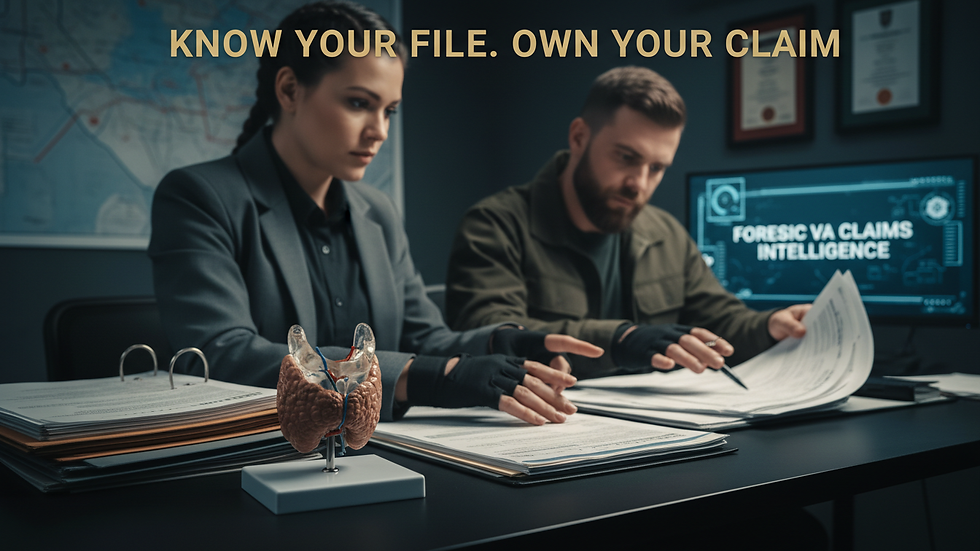
How to Use Your C-File to Fight Back After a Failed C&P Exam
Your C-file is your battlefield map. It shows every move the VA has made on your claim. Here’s how to use it effectively:
Get a complete copy of your C-file: You can request it online through eBenefits or by submitting a VA Form 3288.
Review every document: Look for exam reports, medical opinions, service treatment records, and VA correspondence.
Spot inconsistencies: Does the examiner’s report contradict your medical records? Are there missing documents that should be in your file?
Check for procedural errors: Did the VA fail to provide a proper exam? Was the examiner qualified? Were you given a chance to submit evidence before the exam?
Identify secondary conditions: Sometimes the VA misses conditions caused or worsened by your primary disability.
Gather new evidence: Medical opinions from private doctors, buddy statements, and new medical records can strengthen your case.
File a Notice of Disagreement (NOD): If you disagree with the exam or rating decision, this is your formal way to appeal.
Consider requesting a new C&P exam: If the original exam was inadequate, a new exam can provide the evidence you need.
This process is not easy, but it’s the only way to take control. You need to be methodical, patient, and relentless.
Taking Control: Your Next Steps After a C&P Exam Failure
You are not alone, but you are the commander of your claim. Here’s your mission plan:
Get your file analyzed by experts who understand the VA system: They will give you a clear picture of what’s inside your file - the good, the bad, and the ugly.
Use that intelligence to prioritize your next moves: Don’t waste time or money chasing appeals blindly.
Gather targeted evidence: Focus on what the VA missed or ignored.
File appeals or supplemental claims with precision: Use the right forms and legal arguments.
Stay organized and keep copies of everything: Your claim is a marathon, not a sprint.
Leverage accredited VA claims agents and advocates: They don’t do the work for you but equip you with the tools to win.
Remember, the VA system is not designed to make it easy. It’s designed to test your persistence and knowledge. Your best weapon is intelligence and a clear plan.
If you want to learn more about how to get c&p exam failure assistance that puts you in control, reach out to accredited advocates who specialize in forensic file analysis. They will help you see your claim clearly and act decisively.
Veterans who have been denied or underrated deserve clarity and control over their claims. You’ve done the hard part by serving your country. Now it’s time to fight smart, not just hard. Get the intelligence you need, take command of your file, and push forward with confidence. Your benefits are your right - don’t settle for less.


Comments