


Decoding the Essentials of Your VA Claim File - VA Claim File Essentials

You’ve been through the system. You’ve submitted your evidence, attended your exams, and followed every instruction. Yet, your claim is stuck. Denied. Deferred. Or worse, rated but underrated. You’re not alone. The problem isn’t your effort — it’s what’s inside your VA claim file. If you want to win, you need to understand what’s actually in your file. No fluff. No guessing. Just the facts, the gaps, and the next moves.
This is your mission briefing on the VA claim file essentials. I’m here to give you the intelligence you need to take control of your case. No rescue. No sugarcoating. Just the tools to lead your own fight.
What Is Inside Your VA Claim File Essentials
Your VA claim file is the battlefield where your case lives. It’s a collection of documents, records, and notes that the VA uses to decide your benefits. Knowing what’s inside is not optional — it’s critical.
Here’s what you’ll find:
Service Treatment Records (STRs): These are your medical records from active duty. They show injuries, illnesses, and treatments during service.
VA Medical Records: Any treatment you received at VA hospitals or clinics after service.
Private Medical Records: If you submitted private doctor records, they should be here.
C&P Exam Reports: Compensation and Pension exams are the VA’s medical evaluations. These reports can make or break your claim.
Lay Statements: Your own statements or those from family, friends, or fellow service members supporting your claim.
Rating Decisions: Previous VA decisions on your claim, including denials or ratings.
Correspondence: Letters between you and the VA, including notices, requests, and responses.
Buddy Statements: Statements from comrades who witnessed your injury or condition.
Legal Notes: Notes from VA adjudicators or examiners that can reveal how your claim was handled.
Every piece matters. Missing or misfiled documents can stall or sink your claim. Your job is to know what’s there, what’s missing, and what’s hurting your case.

Why Veterans Get Stuck - The Hidden Pitfalls in Your VA Claim File Essentials
You did everything right, but the VA still says no or lowballs your rating. Why? Because the VA claim file is a maze of red tape and hidden traps.
Here’s what trips up most veterans:
Incomplete or Missing Evidence: The VA won’t chase down missing records. If your service treatment records don’t show your injury, your claim stalls.
Poor C&P Exams: Exams that don’t fully address your condition or ignore key symptoms can kill your claim.
Contradictory Statements: If your statements don’t match medical records or exam reports, the VA uses that against you.
Legal Errors: The VA often misapplies laws or regulations, especially with complex claims like toxic exposure or secondary conditions.
Unaddressed Secondary Claims: Many veterans don’t realize their secondary conditions linked to service are also compensable.
Outdated or Overlooked Evidence: Old evidence can be buried or ignored if not properly highlighted.
You need to identify these pitfalls in your file. That’s how you break the cycle of denial and get the rating you deserve.
How to Read and Analyze Your VA Claim File Essentials
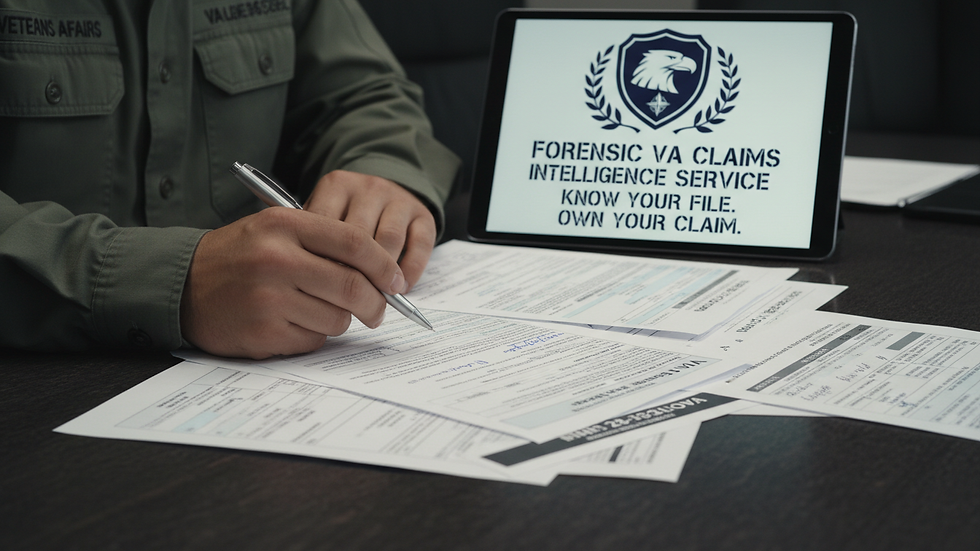
Reading your VA claim file is not like reading a book. It’s a forensic mission. You need to dissect every page with a tactical eye.
Follow this step-by-step approach:
Request Your Complete File: Use the VA’s eBenefits or ask for a full copy of your claims folder (C-file). Don’t settle for partial records.
Organize by Document Type: Separate medical records, exam reports, rating decisions, and correspondence.
Check for Missing Records: Compare your known medical history and submitted evidence to what’s in the file.
Analyze C&P Exams: Look for gaps in exam questions, missing tests, or examiners ignoring your symptoms.
Review Rating Decisions: Identify if the VA addressed all claimed conditions and applied the correct laws.
Spot Contradictions: Highlight any statements or records that conflict with each other.
Look for Legal Notes: These can reveal if the VA made errors or overlooked evidence.
Prioritize Issues: List the biggest problems in your file that need fixing.
This is how you turn a confusing pile of papers into a clear action plan.
The Power of Knowing - How to Use Your VA Claim File Essentials to Your Advantage
Once you understand your file, you gain power. Power to:
Challenge Denials: Point out missing evidence or exam flaws.
Request New Exams: Demand exams that fully address your conditions.
File Effective Appeals: Use your file to build a strong legal argument.
Identify Secondary Claims: Add linked conditions that increase your rating.
Avoid Costly Mistakes: Don’t pay for representation blindly. Use your file to vet advocates.
Control Your Case: You’re no longer in the dark. You lead the fight.
If you want to understand my va claim file, this is the first step. Don’t let the VA control your story. Take the file, own it, and use it.
What Comes Next - Taking Tactical Action on Your VA Claim File Essentials
Knowing your file is just the start. The next step is executing a plan that fixes the problems and pushes your claim forward.
Here’s your tactical checklist:
Fill Evidence Gaps: Gather missing medical records or buddy statements.
Request a New C&P Exam: If the last exam was flawed, demand a new one.
Submit a Supplemental Claim: Use new evidence or point out errors in the previous decision.
File a Notice of Disagreement (NOD): If you disagree with the rating, file an appeal with clear reasons.
Use Accredited Advocates: Work with trusted VA claims agents who respect your control and provide clear intelligence.
Track Every Step: Keep copies of everything and document all communications.
This is a mission, not a waiting game. Every day you delay, you lose ground.
Your VA Claim File Essentials - The Final Word
Your VA claim file is your battlefield dossier. It holds the truth about your service-connected injuries and illnesses. But it’s also a maze of missing pieces, errors, and legal traps. If you want to win, you must decode it.
No one else will do this for you. You need to take control, get the full picture, and plan your next move with precision. This is how you break free from denial, get the rating you deserve, and finally close the visibility gap.
Your file is not just paperwork. It’s your story. Own it. Lead it. Win it.


Comments